Design systems
UI/visual design
Product design
When I joined Ontra, there was no design system except for a lightly skinned set of Bootstrap components that weren't necessarily used consistently across the app. I worked with our engineering team—particularly our first frontend engineer hire—to establish a more modern, scalable system that was well-documented and accessible to anyone who was building.
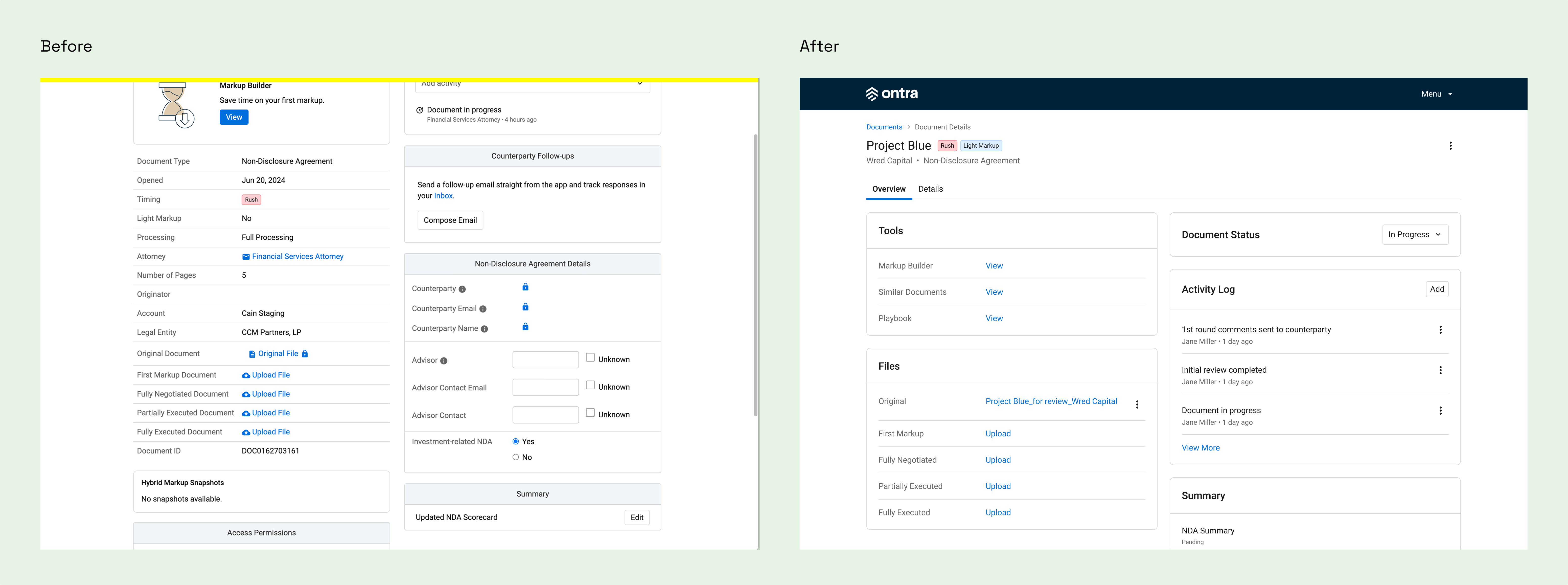
The first phase was an MVP: reskinning the existing Bootstrap components for a more modern look, i.e. a white page background, updated font and icon set, and a more restrained use of color (especially things like bright red destructive buttons). This brought the web app into the right decade, even though there was still much to do. I defined the scope of changes and spent a lot of time QA'ing individual pages, as pages were not yet built to take on changes easily.
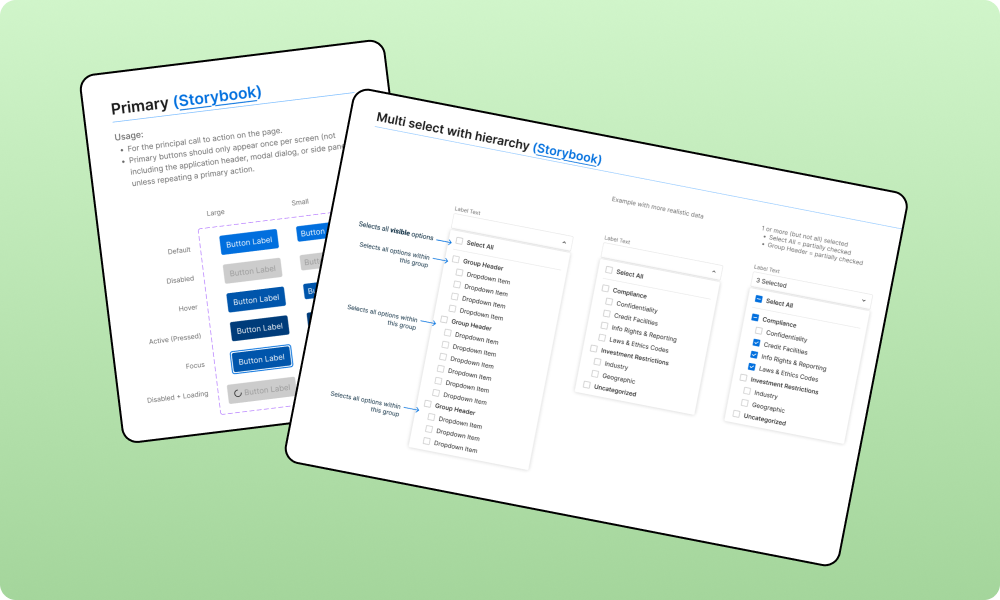
The second phase, which came later with a larger UX and engineering team and multiple products to design across, involved in-depth discussions to determine the behaviors of these components, and a standardization of component usage across various areas of the app. We established more robust documentation on Storybook; we could now use existing components almost exclusively when designing new flows and functionality.
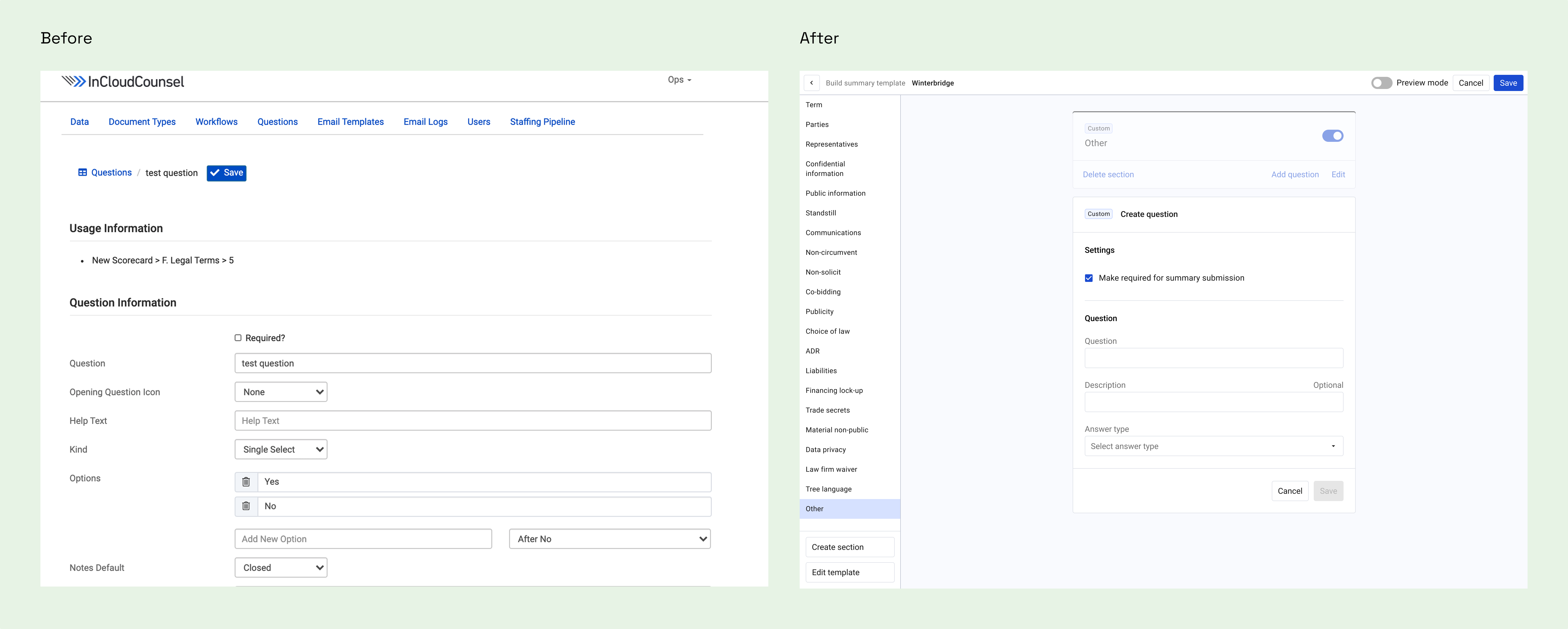
This was a full migration from Ember to React, requiring collaboration across every development team as well as a dedicated engineering team. This was primarily led by my manager, the VP of UX, but every UX designer was responsible for steering the conversion of their product area (discussing changes with our dev teams, providing mockups, etc.). We also established internal processes to add or alter existing components.
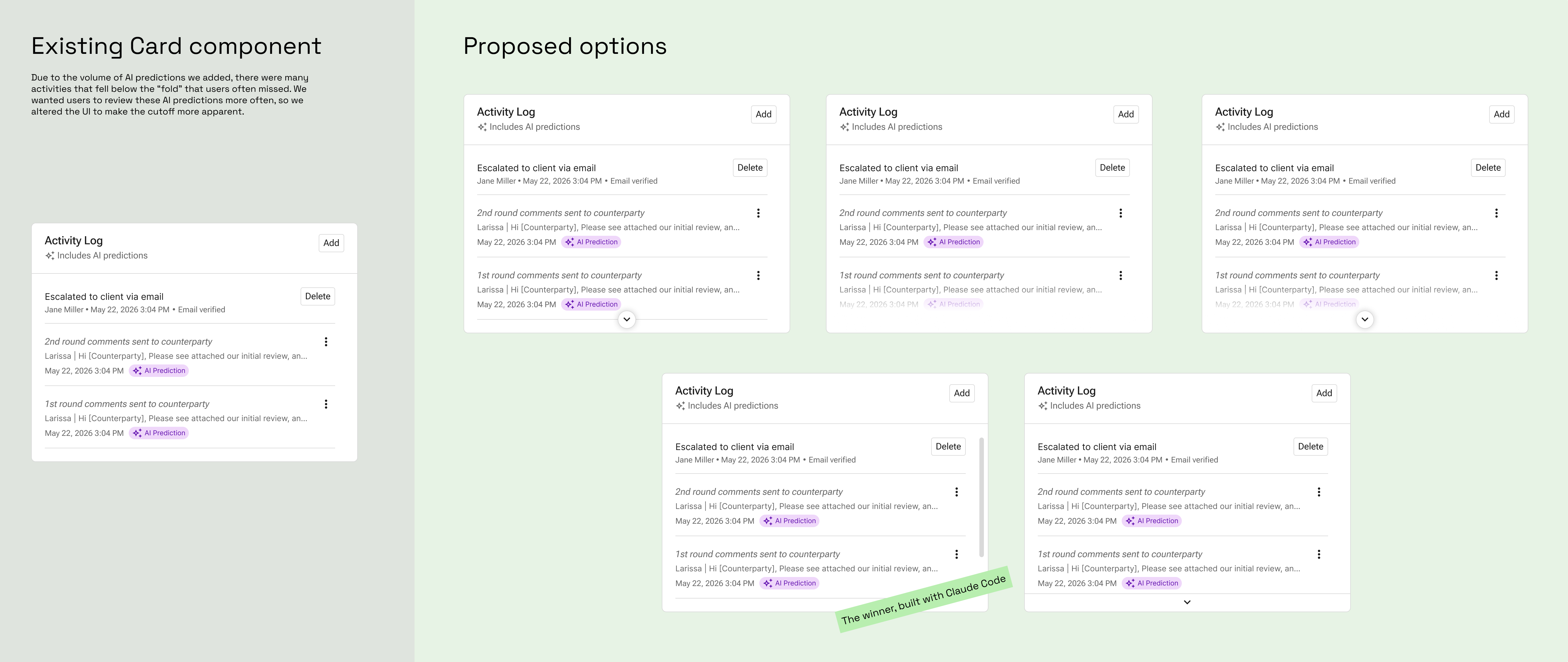
With a mature design system in place, the dedicated engineering team was dispersed to other teams. In its place, we had a frontend guild that engineers could take part in for maintenance and any one-off alterations that we needed. With the advent of Claude Code, UX designers also started writing and pushing PRs themselves. For example, when I needed to update the expansion behavior for overflow content in our Card component, I spun up a PR, tested it on the frontend, and submitted it for review. After resolving a few comments, it was merged into the codebase.
We also started relying less on detailed Figma mockups, and more on interactive mockups spun up on tools like Claude Design or Lovable. Even though these tools didn't 100% stick to the design system, we could easily communicate the desired changes to the engineers because we had a shared understanding of the Ontra design system.